

The Secret to a Lush Podocarpus: Why Consistency is King
Whether you’re using them as a sleek privacy screen or a majestic standalone specimen, Podocarpus (often called Buddhist Pine or Fern Pine) is the backbone of a sophisticated landscape. They are famous for being “tough as nails,” but there is a big difference between a Podocarpus that is simply surviving and one that is thriving.
If you want those dense, midnight-green needles and steady growth, the secret isn’t magic—it’s consistency.
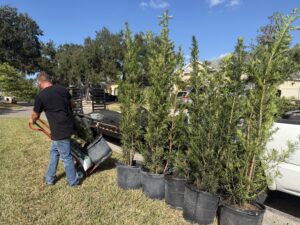
Watch & Learn: Professional Care Tips
Before we dive into the details, check out these quick visual guides to see these principles in action:
-
Quick Tips: Essential Podocarpus Maintenance (Short Video)
-
Deep Dive: Comprehensive Guide to Growing Healthy Podocarpus
1. The Establishment Phase: The First Year is Vital
The most common question we get is: “How long does it take for the roots to fully establish?”
Generally, a Podocarpus takes one full year to establish its root system in the ground. During these first 12 months, the plant is vulnerable. It is focused on pushing roots outward into the native soil rather than growing new leaves.
-
The First 3 Months: Critical. The plant relies entirely on the water you provide to the root ball.
-
6 to 12 Months: The roots begin to anchor, and you’ll start to see more “top growth” (new height).
-
After Year 1: Once established, your Podocarpus becomes significantly more drought-tolerant.
2. Mulching: The Protective Blanket
Mulching isn’t just for looks—it is a functional necessity for a healthy Podocarpus. Because these plants have relatively shallow feeder roots, they need protection from the elements.
-
Moisture Retention: A 2–3 inch layer of organic mulch (like pine bark or wood chips) keeps the soil from drying out too fast, which is a lifesaver during the heat of summer.
-
Temperature Control: Mulch acts as insulation, keeping roots cool in the summer and warm in the winter.
-
Weed Competition: It prevents weeds from stealing the water and fertilizer meant for your hedge.
-
Important Note: Always keep mulch a few inches away from the actual trunk of the plant to prevent “trunk rot.”
3. Watering: The “Goldilocks” Zone
Podocarpus is often labeled as drought-tolerant, which is true—after that first year. Until then, you need to find the balance.
-
The Stress Signal: If watering is inconsistent, Podocarpus responds by dropping interior needles or developing brown tips.
-
The “Yo-Yo” Effect: If the soil is bone-dry one week and a swamp the next, the fine feeder roots die off. Consistency keeps the root system expanding evenly.
4. Fertilizing: Fueling the Green
Think of fertilizer as the “multivitamin” for your hedge. Because Podocarpus are often planted close together for privacy, they are constantly competing for nutrients.
-
Preventing “The Yellows”: Podocarpus are prone to magnesium and iron deficiencies. Without consistent feeding, your vibrant green wall can quickly turn a pale lime color.
-
Structural Integrity: Regular feeding with a balanced, slow-release fertilizer ensures the new growth is strong and woody, rather than weak and floppy.