

1️⃣ The Pre-Freeze “Drink”
Water thoroughly 24 hours before the freeze.
• Why: Moist soil holds warmth better than dry soil and slowly releases heat overnight, protecting the root zone.
• Important: Water the soil only, not the leaves. Wet foliage freezes faster and increases damage.
• Tip: Water earlier in the day so excess moisture can drain before nightfall.
⸻
2️⃣ Mulch for Insulation
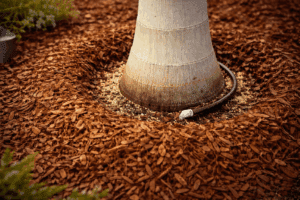
Apply 2–4 inches of mulch (pine bark, straw, or wood chips) around the base.
• Helps stabilize soil temperature and protects shallow, newly planted roots.
• Keep mulch 1–2 inches away from the trunk to prevent rot and fungus.
⸻
3️⃣ Cover the Right Way
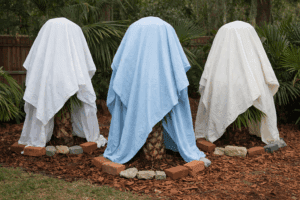
For tender plants and newly installed palms, cover before sunset.
• Best materials: Frost blankets, burlap, or old bedsheets.
• Avoid plastic: Plastic traps moisture and transfers cold directly to leaves. If used, always place fabric between plastic and the plant.
• Tent method: Drape the cover all the way to the ground and secure the edges with bricks or stones.
❌ Do not tie covers around the trunk — roots need protection most.
⸻
4️⃣ Add Gentle Heat (Optional)
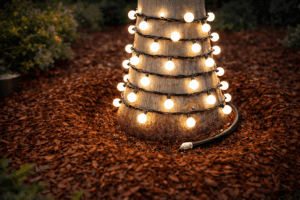
For extra protection, place old-style (non-LED) Christmas lights or a 60-watt utility bulb under the cover.
• The mild warmth can raise temperatures just enough to prevent frost damage.
• Keep lights away from foliage and never use high-heat sources.
⚠️ The Morning After
• Remove covers once temperatures rise above 50°F.
• Leaving covers on in Florida sunshine can overheat plants.
• Do NOT prune damaged leaves right away. Brown or drooping fronds help insulate the plant. Wait until all frost danger has passed (usually late February) before trimming.
⸻
🌴 Important Note
This guide helps protect plants during typical Florida cold snaps. Prolonged hard freezes (below 28°F for several hours) may still cause damage, even with protection.