Podocarpus after-care.
- Master the “Morning Soak”
Watering is the single most important factor in plant survival. Because Podocarpus are often planted close together for privacy, their root balls compete for moisture.
- The Schedule: For the first two weeks, water every single day. From weeks 3 to 6, you can drop to every other day. After two months, 2–3 times a week is usually sufficient.
- The Timing: Always aim for the early morning. Watering before the Florida sun hits its peak allows the roots to drink deeply without the water evaporating.
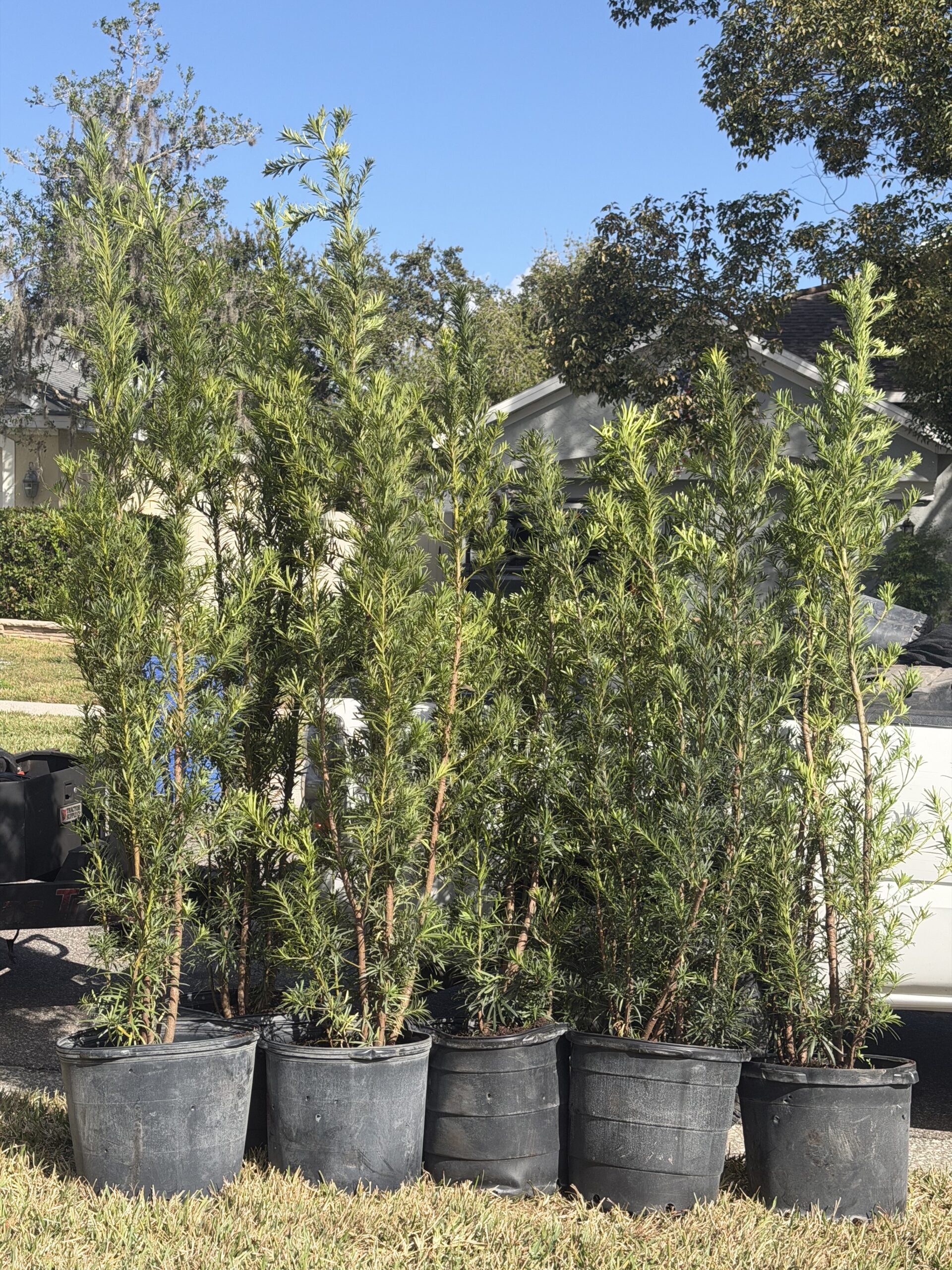
- The Method: Don’t just spray the leaves! Focus your hose at the base of the plant. You want a slow, deep soak that reaches the bottom of the 15-gallon root ball.
- The “Heat Trap”: Rocks vs. Mulch
Many homeowners love the look of white river rock or lava rock around their hedges. While beautiful, rocks can be a “heat trap” for young Podocarpus.
Rocks absorb UV rays and stay hot long after the sun goes down, which can literally “cook” the delicate new surface roots. If you choose rocks, you must water more frequently to compensate for the higher soil temperatures.
Our Advice: If you want the healthiest plants possible, stick with 2–3 inches of organic mulch. It acts like a cooling blanket for the roots and helps the soil stay moist. - Hands Off the Pruners (For Now!)
It’s tempting to start trimming your hedge into a perfect rectangle the day it’s planted, but patience pays off.
Your Podocarpus needs its leaves to photosynthesize and create energy for root growth. Wait until you see a flush of new, bright green growth before you start shaping. If you see a dead or broken branch, feel free to snip that off, but leave the rest alone for at least 8 weeks. - Feed the Roots, Not the Stress
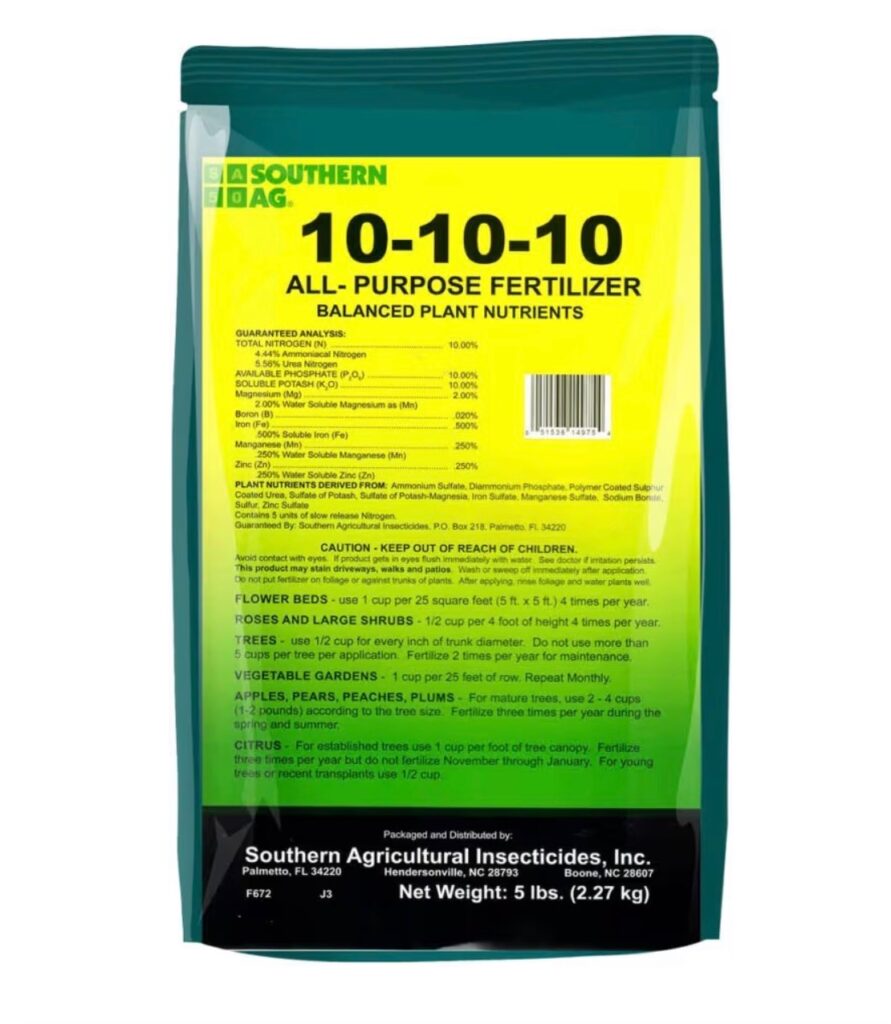
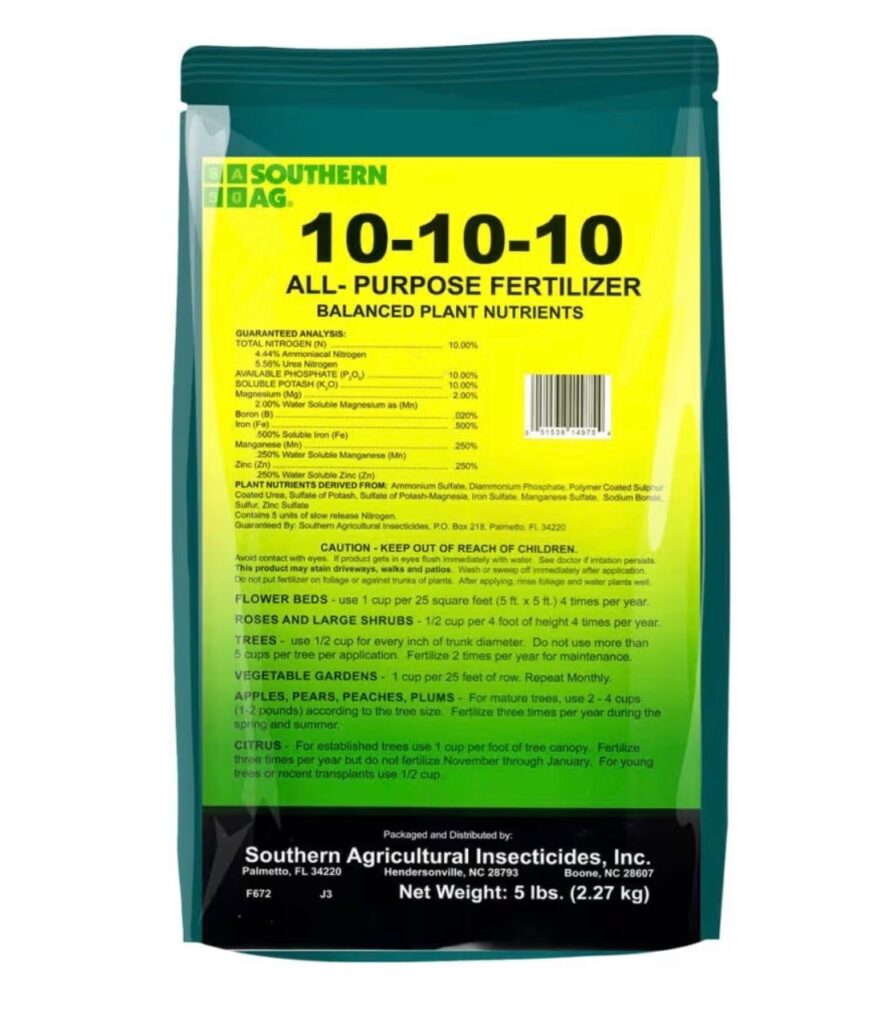
Never fertilize a stressed plant. Wait about two months until the plant is “established” before applying a slow-release, balanced landscape fertilizer. Applying fertilizer too early can burn the tender new roots that are trying to find their way into your soil. - Signs of Success (and Stress)
It is perfectly normal to see a few yellow leaves or minor leaf drop in the first month—this is just “transplant shock.”
What to look for:
- Good Sign: New, soft, light-green leaves at the tips.
- Warning Sign: Wilted, “crunchy” leaves or significant browning (this usually means it needs more water!).
Final Thoughts
A 15-gallon Podocarpus is a hardy, beautiful addition to any Florida home, but it isn’t “set it and forget it” just yet. Give it a little extra love in these first few months, and it will reward you with years of green, vibrant privacy.